Sim Room Fit

Launch Monitor Finder

The right launch monitor is decided by your room before it is decided by your budget. This finder works class first: radar behind the ball, camera beside it, or overhead. It rules out the classes your space cannot hold, ranks what is left by your budget and data priorities, and only then names example models.

Classes that fit your answers

Finder notes

    The example models behind the finder, one per class and budget the tool can return. Each is labelled research based: we have checked its manufacturer's setup figures, not hit balls with it.

    Garmin Approach R10

    Garmin
    Research based comparison
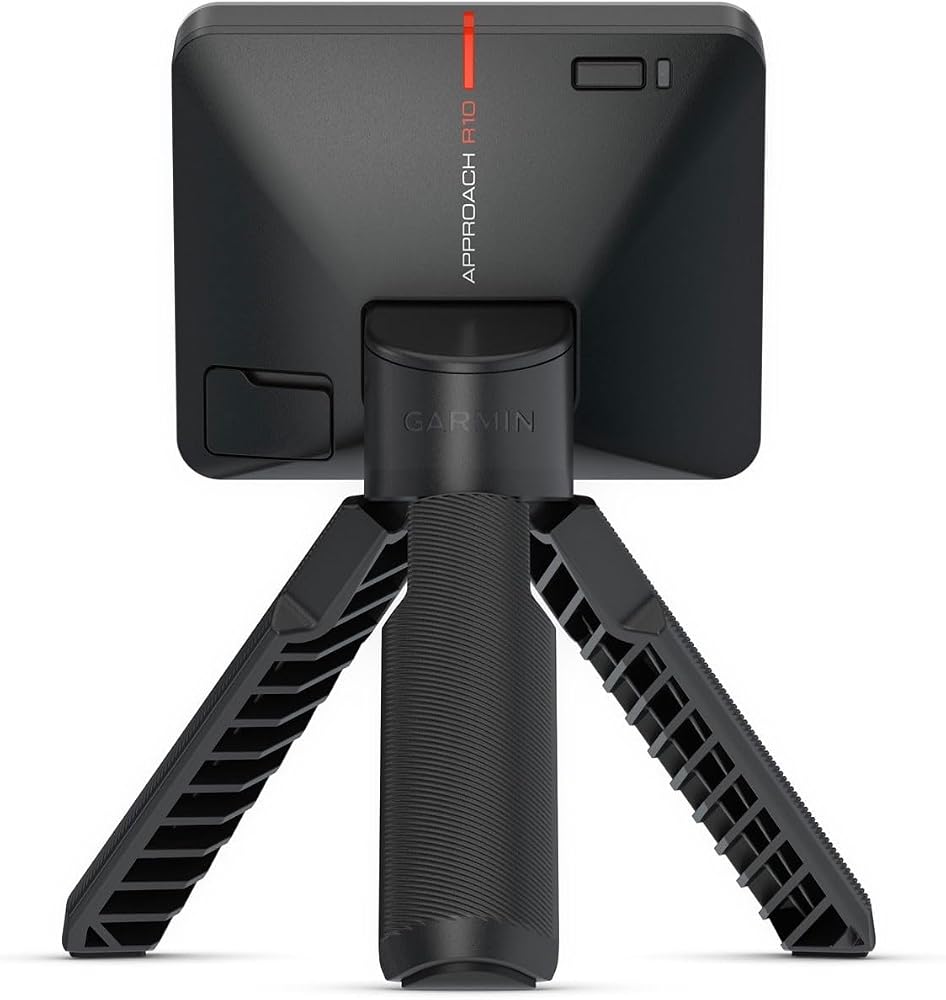
    Garmin Approach R10 launch monitor on its tripod

    The entry radar example. A portable Doppler radar unit that sits 6 to 8 feet behind the ball, works indoors and outdoors, and reports ball and club metrics through the Garmin Golf app. Indoor spin is calculated unless you use Titleist RCT balls, and simulator putting is assigned rather than measured.

    • Placement: 6 to 8 ft behind the ball (Garmin setup guidance)
    • Indoor and outdoor use, up to 10 hours of battery
    • Ball and club metrics, including club path and face angle

    Product data last checked 2026-10-23. Prices are shown only on the merchant's own page.
    What we like: Garmin Approach R10

    • Lowest cost way into a measured simulator setup
    • Genuinely portable between room and range

    What could be better: Garmin Approach R10

    • Needs about 15 ft of room depth once flight and screen clearance are counted
    • Indoor spin is an estimate without RCT balls

    Rapsodo MLM2PRO

    Rapsodo

    Research based comparison
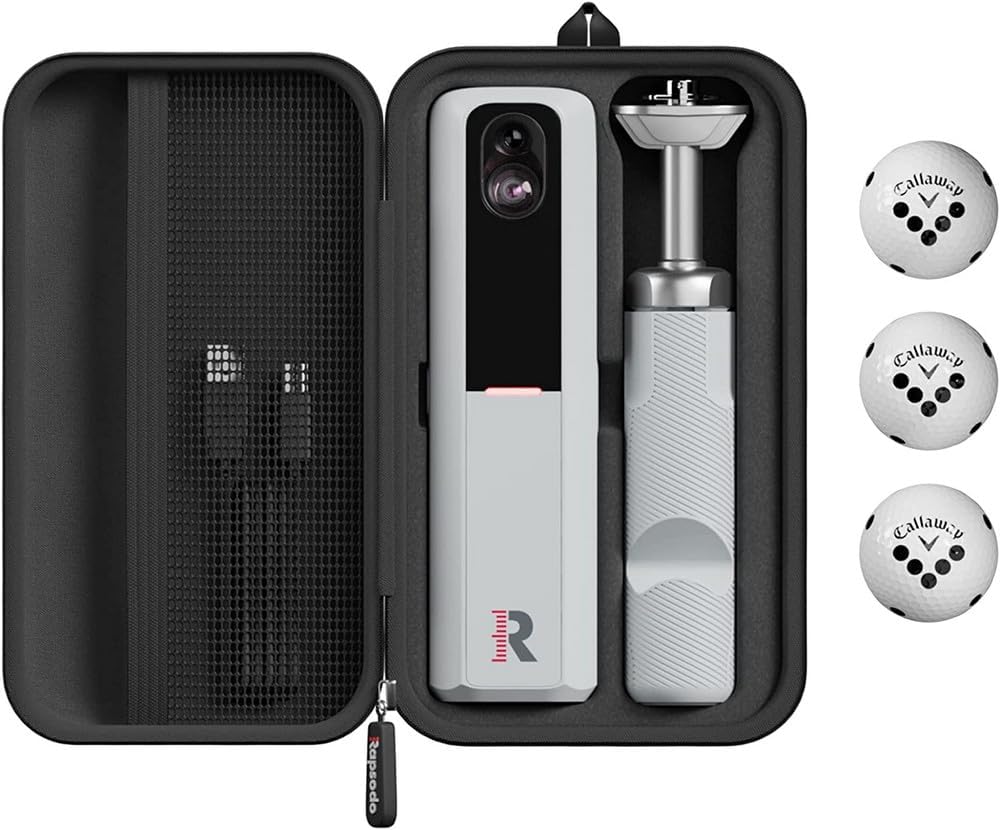
    Rapsodo MLM2PRO launch monitor in its carry case with RPT balls

    The second entry radar example. Radar plus two cameras, set 7.5 feet behind the ball with at least 8 feet of ball flight to the net. Spin rate and spin axis are measured when you use RPT balls, and the cameras record impact and swing video.

    • Placement: 7.5 ft behind the ball (Rapsodo setup guidance)
    • Measured spin with RPT balls
    • Impact Vision and swing video from its own cameras

    Product data last checked 2026-10-23. Prices are shown only on the merchant's own page.
    What we like: Rapsodo MLM2PRO

    • Measured spin at an entry price
    • Strong video tools for practice

    What could be better: Rapsodo MLM2PRO

    • Full features sit behind a yearly premium membership
    • Needs a little more than 15 ft of room depth in total

    FlightScope Mevo+

    FlightScope

    Research based comparison
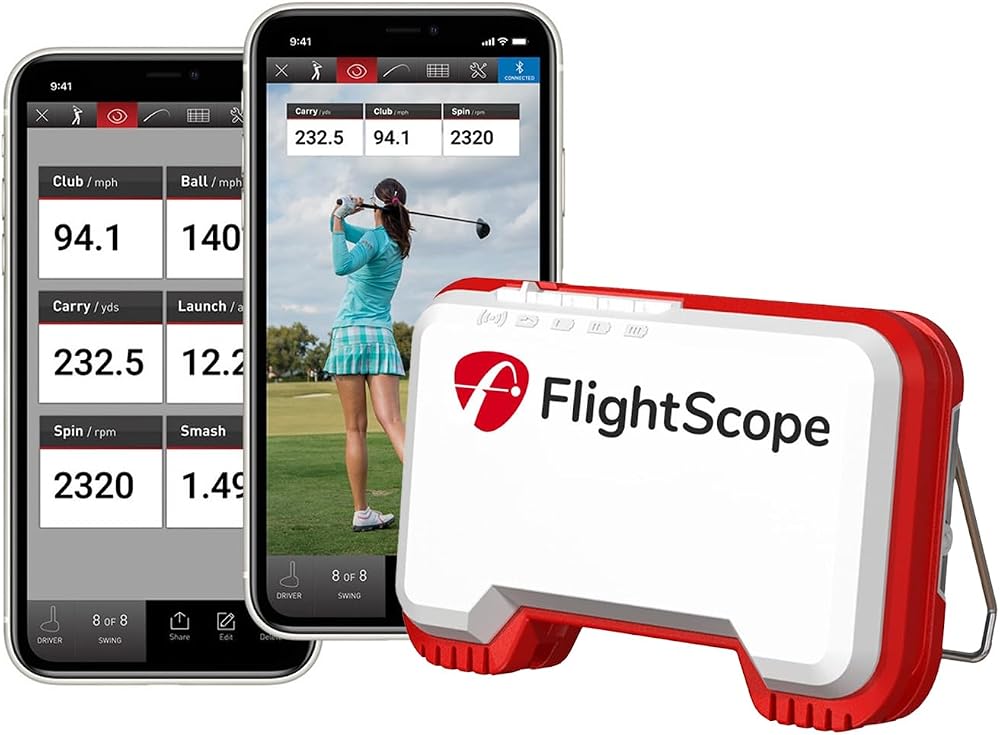
    FlightScope Mevo+ launch monitor with the app on two phones

    The mid radar example. Fusion Tracking radar set 7 to 9 feet behind the ball; FlightScope asks for 8 feet of ball flight as a minimum and recommends 13 feet indoors. It has a putting mode, and deeper club data is the paid Pro Package add-on. The Amazon listing is a bundle, so check what is in the box before you buy.

    • Placement: 7 to 9 ft behind the ball (FlightScope setup guidance)
    • 20 or more data parameters across full swing, chipping and putting
    • No subscription required for the base data set

    Product data last checked 2026-10-23. Prices are shown only on the merchant's own page.
    What we like: FlightScope Mevo+

    • Putting mode, which most radar units lack
    • Deep data set with no yearly fee at the base level

    What could be better: FlightScope Mevo+

    • Wants the most depth of any class in this guide at FlightScope's recommended flight distance
    • Club data in depth costs extra (Pro Package)

    SkyTrak+ (ST+)

    SkyTrak

    Research based comparison
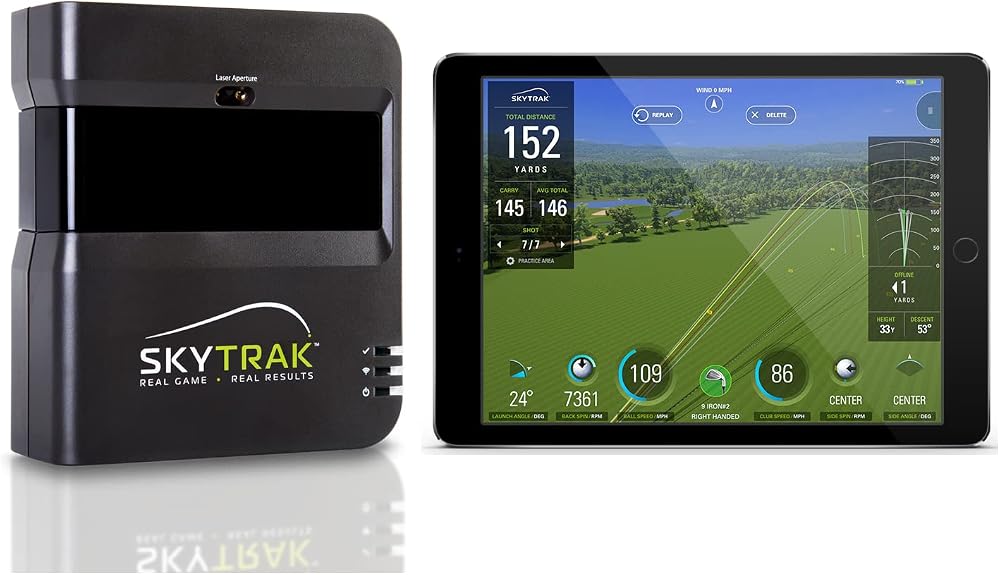
    SkyTrak+ launch monitor beside a tablet showing shot data

    The beside-ball camera example. A photometric camera system with dual Doppler radar that sits beside the ball, so it needs no space behind you: SkyTrak's own minimum room is 10 ft wide by 10 ft deep. It measures club path and face angle with no stickers. The unit moves to the other side for a left-handed golfer.

    • Placement: beside the ball (SkyTrak setup guidance)
    • Measured club data: path, face angle, face to path
    • Indoor and outdoor use

    Product data last checked 2026-10-23. Prices are shown only on the merchant's own page.

    What we like: SkyTrak+ (ST+)

    • Fits rooms radar cannot: nothing sits behind the golfer
    • Club data measured, not estimated, at a mid price

    What could be better: SkyTrak+ (ST+)

    • Membership plan needed for course play features
    • Moves sides when a left-handed golfer plays

    How the finder matches you

    Space rules come first, from the manufacturers' own setup figures: radar needs about 15 feet of depth, a beside-ball camera about 13, and an overhead unit 16 feet with a 9 to 10 foot ceiling mount band. Outdoor use removes the overhead class. Then your answers rank what survives: entry budgets point at radar, club data at the camera and overhead classes, real putting at overhead and at the FlightScope radar example (the Garmin R10 assigns putts in simulator play rather than measuring them), and two-handed households at overhead, because a beside-ball unit moves sides with the golfer. Full sourcing is on the methodology page.

    Worked examples

    Shallow room, club data

    14 ft deep, mid budget, measured club data matters.

    Camera class wins: radar and overhead are ruled out on depth, SkyTrak+ is the example

    Deep room, entry budget

    20 ft deep, entry budget, ball data enough.

    Radar class wins: Garmin R10 and Rapsodo MLM2PRO are the examples

    Two golfers, real putting

    18 ft deep, both handednesses, premium budget, putting must be real.

    Overhead class wins: nothing to move between golfers, putting measured

    Frequently asked questions

    Radar or camera launch monitor: which is better?
    Neither, in the abstract. Radar measures the ball from behind and needs depth; cameras measure at impact and need almost none. Indoors, radar spin is often calculated unless the ball is marked (RCT or RPT balls, or stickers), while the camera class measures club data directly. Your room usually makes this decision for you.
    Why are there no overhead examples to buy here?
    Overhead units such as the Uneekor EYE XO are usually sold direct or through simulator retailers, not Amazon. The finder still recommends the class when it fits, and says so plainly, rather than pushing a lesser class because it has a link.
    I want club data. What should I pick?
    At a mid budget in a normal room, the camera class (SkyTrak+) measures club path and face angle with no stickers. Radar gets there with add-ons (FlightScope's Pro Package) or marked balls (Rapsodo's RPT). The finder weighs this when you choose measured club data as your priority.

    Related tools

    Disclaimer: Estimate only. Verdicts follow the manufacturers' published setup figures; test-swing in the room before you buy anything.

    Use this tool on your own site

    Free to embed. Paste this code where you want the tool to appear. It carries a small credit link, which is all we ask.